
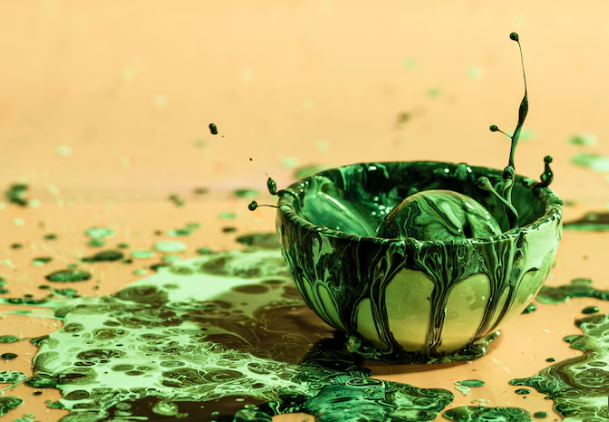
Nature’s influence on creativity extends far beyond landscape paintings and floral patterns. It appears in the curve of a chair, the arrangement of a building’s windows, the texture of a ceramic bowl, and the shifting colors of a digital installation. Even works that seem entirely modern or industrial can carry traces of natural structures and processes.
In contemporary art and design, nature often operates beneath the surface. Artists and designers study how living things grow, how materials change, and how environments create patterns. They translate these observations into objects and experiences that connect modern life with the physical world.
Understanding this influence reveals how closely creative work remains tied to nature, even in an age shaped by screens, machines, and manufactured materials.
Moving Beyond Literal Representations
Nature has long supplied artists with recognizable subjects: mountains, animals, flowers, and oceans. Contemporary creators continue to explore these themes, but many focus on nature’s underlying qualities rather than its outward appearance.
A sculpture might express the tension of a bending branch without resembling a tree. A textile may suggest flowing water through repeated lines. An installation could capture the feeling of walking through fog using translucent fabric and diffused light.
This approach allows artists to explore experiences such as movement, fragility, growth, and decay. Nature becomes a way of thinking about form and feeling, rather than simply a subject to depict.
For viewers, the connection may be intuitive. A rounded object can recall a river stone, while a branching composition may suggest roots or veins. The work feels familiar even when the reference remains unnamed.
Organic Forms in Everyday Design
One of nature’s clearest influences appears in the shapes of contemporary objects. Curved furniture, asymmetrical ceramics, and softly contoured lighting often draw on forms shaped by growth, erosion, and movement.
Unlike a perfect geometric solid, a shell or pebble contains subtle variations. Designers can use similar irregularities to give manufactured objects a sense of character.
A table with an uneven wooden edge, for example, preserves evidence of the tree from which it came. A hand-shaped vessel may retain small differences in thickness or curvature that make its construction visible.
However, nature-inspired design involves more than adding curves. An organic form works best when it supports the object’s purpose. A gently shaped handle can improve grip, while a curved seat can accommodate the body. The relationship between appearance and use gives the reference meaning.
Natural Systems as Creative Models
Nature also offers models for organizing complex structures. Branching trees, honeycomb cells, leaf veins, and interconnected root systems demonstrate different ways of distributing material and connecting parts.
Artists may interpret these structures through repeated marks or linked sculptural elements. Designers can use them as starting points when exploring frameworks, surfaces, or modular objects.
Consider a shelving system inspired by branching. Its connection to nature might appear through components that divide and extend, allowing the arrangement to adapt to different spaces. The result does not need decorative leaves to communicate its source.
Such examples show the distinction between copying nature’s appearance and learning from its organization. Both approaches can produce compelling work, but they answer different creative questions.
Texture and the Appeal of Imperfection
Natural surfaces contain information about time and experience. Weathered wood records exposure. Stone carries mineral variations. Clay responds to pressure, moisture, and heat.
Contemporary artists and designers often preserve these qualities instead of concealing them beneath uniform finishes. Visible grain, rough edges, and uneven glazes invite closer attention to the material itself.
Texture also changes how a work is experienced. A polished surface reflects its surroundings, while a coarse one breaks light into small areas of shadow. A woven object reveals its construction through the relationship between individual fibers.
These details can give an object visual depth without additional decoration. They encourage viewers to notice differences that mass production often minimizes.
Imperfection alone, however, does not make an object thoughtful or well made. Its value comes from how deliberately the creator works with the material’s characteristics.
Color, Light, and Atmosphere
Nature’s contribution to contemporary color extends beyond familiar greens and browns. It includes the pale blue of winter shadows, the purple-gray of storm clouds, and the bright orange exposed inside certain fruits.
Artists and designers can draw from these combinations to develop palettes with subtle relationships. A coastal reference, for instance, might combine chalky white, dark seaweed tones, and muted pink rather than rely on blue.
Natural light adds another dimension. Its direction and intensity change throughout the day, altering the appearance of colors, textures, and spaces.
Some installations make these changes part of the artwork. Interior designers may position translucent materials or reflective surfaces so daylight creates shifting patterns. In both cases, the finished work remains responsive to its surroundings.
Nature influences the experience through variation, making the same space or object appear different over time.
Growth, Decay, and the Passage of Time
Many contemporary artworks explore nature through processes rather than permanent forms. Seeds germinate, flowers dry, metals oxidize, and exposed materials gradually weather.
When artists incorporate these changes, time becomes part of the medium. The work may look different each day, challenging the expectation that an artwork should remain fixed.
A temporary arrangement of leaves, for example, can draw attention to curling edges and fading pigments. An outdoor sculpture may acquire a surface that reflects its exposure to rain and air.
These approaches raise questions about control and authorship. The artist establishes conditions, but the environment helps determine the outcome.
They also invite viewers to consider change as something to observe, rather than automatically treat as damage or loss.
Environmental Concerns and Material Choices
Nature influences contemporary creativity through questions of environmental responsibility as well. Artists and designers increasingly examine where materials originate, how objects are manufactured, and what happens after their useful life.
Reclaimed timber, recovered textiles, and reused industrial components can carry both practical and expressive value. Their previous lives may become visible parts of a new work.
Yet a natural-looking object is not necessarily environmentally responsible. Material sourcing, processing, transport, durability, and disposal all matter. A design’s appearance offers only a partial account of its impact.
Thoughtful practice therefore moves beyond an earthy palette or an organic silhouette. It asks whether an object can be maintained, repaired, reused, or taken apart, and whether its materials suit its intended lifespan.
Nature Within Digital Creativity
Digital media may seem distant from the natural world, but they offer additional ways to interpret it. Artists can create moving images based on flocking, branching, rippling, or gradual growth.
Generative artworks use rules to produce variations, sometimes echoing the relationship between recurring patterns and individual differences found in nature. A composition can develop from a simple set of instructions while producing an intricate result.
Digital tools also allow designers to test numerous forms inspired by natural structures. The creative challenge is deciding which qualities matter and why.
Technology becomes most expressive when it helps reveal a relationship: the rhythm of movement, the complexity of a surface, or the interaction between individual elements and a larger whole.
Learning to Notice Nature’s Quiet Presence
Recognizing nature’s influence does not require specialist knowledge. It begins with attention to ordinary details: how a shadow moves, how a leaf folds, or how water changes the appearance of stone.
For artists and designers, these observations can become starting points for experiments with material, structure, and atmosphere. For audiences, they offer another way to understand the objects and spaces encountered each day.
Nature’s hidden influence lies in this continuing exchange. Contemporary creativity transforms observations of the living world into new forms, while those forms encourage us to look more carefully at their source.
Read more: 349+ Vasubaras Captions in Marathi 2026
Comments