
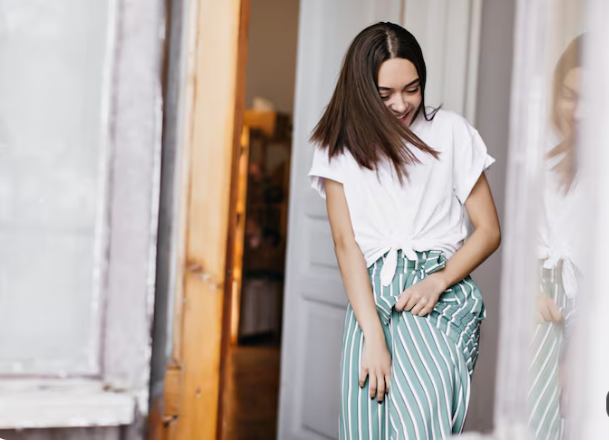
An elegant outfit does not require a designer label or an entirely new wardrobe. Often, the difference comes from small decisions: adjusting a sleeve, choosing shoes that complement the outfit, or giving a familiar shirt a cleaner shape.
Everyday elegance is about making clothes feel considered while remaining comfortable enough for real life. A simple combination of trousers, a T-shirt, and flat shoes can look polished when the fit, proportions, and details work together.
Learning a few practical styling techniques makes it easier to create satisfying outfits from clothes you already own.
Start With Fit and Comfort
Fit influences how an outfit looks and how you feel wearing it. Clothing that pulls, twists, or needs constant adjustment can distract from an otherwise attractive combination.
Check how garments sit across the shoulders, waist, and hips. Trouser hems should work with your chosen shoes, and sleeves should allow comfortable movement.
A good fit does not always mean close-fitting clothing. Loose trousers, relaxed shirts, and oversized jackets can look elegant when their shape feels intentional. The aim is to choose pieces that drape comfortably and maintain the silhouette you want.
Small alterations can also make familiar clothes more useful. Shortening a hem or adjusting a waistband may improve a garment more than adding another accessory.
Create a Clear Balance of Proportions
Proportion describes how the shapes and lengths in an outfit relate to one another. Paying attention to this relationship can make simple clothing feel more coordinated.
For example, wide-leg trousers can work with a neat knit or a shirt tucked at the waist. A relaxed top might pair well with straight trousers that give the outfit a clear line.
These are starting points rather than rules. Loose pieces can work together, too. A visible waistband, an open neckline, or a shorter jacket may provide enough definition.
Before leaving, look at the whole outfit instead of judging each garment separately. Notice where hems meet and whether one small adjustment makes the combination feel more balanced.
Use Color to Connect the Outfit
A coordinated color palette gives separate pieces a sense of belonging together. You do not need to dress entirely in neutrals, but limiting the number of competing colors can simplify styling.
Try building an outfit around two main colors, then introduce a third through a small detail. Navy trousers, a cream shirt, and burgundy shoes create a different mood from the same trousers worn with pale blue and white.
Tonal dressing is another useful approach. Combining shades from one color family—such as camel, beige, and chocolate—can produce a cohesive result without requiring an exact match.
Choose colors you enjoy wearing and can combine easily with the rest of your wardrobe.
Give Everyday Pieces a More Defined Shape
A few adjustments can change how a familiar garment sits. A full tuck can create a clear waistline, while a small front tuck may add definition to a relaxed shirt.
Sleeves offer another opportunity. Turning back a cuff can reveal the wrist and keep a long sleeve from bunching around the hand. An open shirt worn over a simple top can introduce a vertical line and make a casual combination feel more deliberate.
The effect depends on the fabric and cut. Thick material may become bulky when tucked, while a fluid blouse may fall neatly into place. Try the adjustment, move around, and keep it only if it remains comfortable.
Add One Piece With Structure
A structured garment can give an outfit a clear outline. This might be a jacket with a defined shoulder, trousers that hold their shape, or a bag with a firm silhouette.
For example, a blazer can bring definition to jeans and a plain top. A crisp shirt can provide a similar effect when worn with relaxed trousers.
Choose structure that suits your day. A soft jacket may be more practical than a sharply tailored one, especially if you spend time commuting or moving between different activities.
One well-chosen piece is often enough to bring the outfit together.
Combine Textures Thoughtfully
Texture adds interest when colors and shapes are simple. A fine knit worn with denim, a cotton shirt paired with smooth trousers, or a linen jacket over a plain top can create depth without relying on bold prints.
Notice how fabrics behave together. A heavy top may overwhelm a very delicate skirt, although that contrast can also be intentional. A lighter layer might create the balance you prefer.
Fabric condition matters as much as fabric type. Pilling, visible stains, stretched necklines, and badly creased seams can distract from the overall appearance. Basic garment care helps everyday pieces look their best.
Choose Accessories With a Purpose
Accessories can connect an outfit, introduce color, or create a focal point. A belt may define the waist, earrings may frame the face, and a scarf may bring together colors already present in the clothing.
Start by deciding what the outfit needs. If the neckline is detailed, earrings may work better than a necklace. If the clothes are plain, a patterned scarf or distinctive bag can supply interest.
There is no need for every metal finish or accessory color to match exactly. Repeating one element is often enough to create continuity.
Before adding another piece, check whether it improves the outfit’s balance or simply makes it busier.
Pay Attention to Shoes and Hems
Shoes help establish the mood of an outfit. The same trousers can feel relaxed with clean trainers, understated with loafers, or dressier with a sleek boot.
Elegance does not depend on heel height. Comfortable flats, sandals, and trainers can all work when their shape and condition suit the clothes.
Check the relationship between footwear and trouser length. A hem that drags or catches under a shoe may need adjusting. When trying a new outfit, wear the actual shoes you plan to use so you can assess the full silhouette.
Finish With a Quick Clothing Check
A short check before leaving can catch details that are easy to overlook. Smooth a twisted seam, remove visible lint, straighten a collar, and check that fastenings sit properly.
Use steaming or ironing methods appropriate for the care label, and keep shoes and bags reasonably clean. These small habits help clothes look cared for without requiring elaborate preparation.
It also helps to save combinations that work. A quick outfit photo can remind you how you styled a particular shirt or which shoes suited a pair of trousers.
Elegant everyday dressing becomes easier when you understand your own clothes. With thoughtful proportions, coordinated colors, practical accessories, and attention to condition, familiar pieces can feel polished while still reflecting your personality.
Read more: The Importance of Adaptability in Building a Successful Modern Business
Comments