
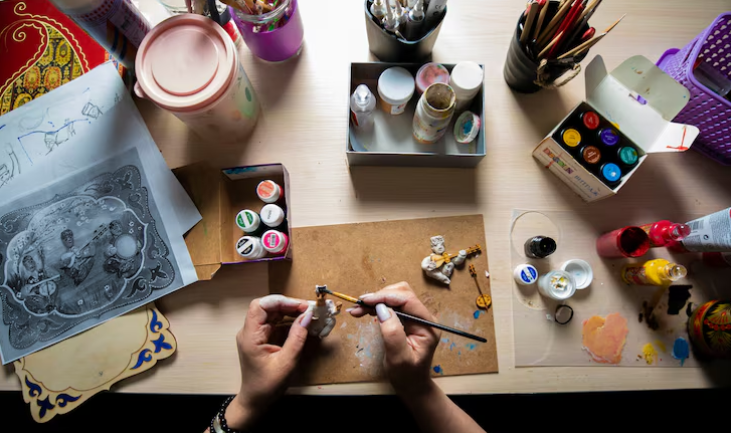
A pencil moving across paper, a brush carrying paint over canvas, and fingers shaping clay all create a direct connection between an artist and their materials. Even as digital tools expand the possibilities of creative work, these physical experiences remain valuable.
Digital art offers speed, flexibility, and opportunities that earlier generations could hardly imagine. Artists can revise compositions, experiment with colors, and share their work across the world. Yet traditional techniques continue to teach skills and ways of seeing that remain useful across every medium.
Drawing, painting, printmaking, and sculpture give artists more than a collection of methods. They develop observation, encourage thoughtful decisions, preserve cultural knowledge, and make room for unexpected discoveries. Their relevance comes from what they help artists understand and express.
Building a Strong Foundation in Art
Traditional art techniques help artists understand the basic principles behind effective visual work. Line, shape, proportion, value, color, and composition matter whether an image appears on paper or a screen.
Drawing an object from life, for example, requires careful attention to its structure. An artist must compare angles, notice relationships between shapes, and understand how light describes a surface. Those observations can later support digital illustration, animation, or three-dimensional modeling.
Working with paint also makes color relationships tangible. Mixing pigments allows artists to see how colors affect one another and how small adjustments change the mood of an image. The behavior of physical pigments differs from digital color mixing, but the practice still builds useful visual judgment.
Software can help artists execute an idea. A strong foundation helps them decide what the image needs.
Teaching Artists to Observe Carefully
Everyday looking is often quick and selective. Drawing asks people to slow down and examine what is actually in front of them.
Someone sketching a chair may initially draw what they believe a chair should look like. Through observation, they begin to notice the specific tilt of its legs, the spaces between its supports, and the shadows beneath its seat. Their attention moves from a familiar label to a particular object.
This habit is valuable beyond realistic drawing. An abstract painter may study the rhythm of branches, while a designer might notice the balance of shapes in a crowded street.
Traditional practice offers a simple way to develop that attention. A sketchbook and pencil allow artists to record details, test ideas, and build a personal collection of visual experiences.
Developing Confidence Through Material Limits
Digital tools often allow extensive revision. Traditional materials introduce different conditions: ink can stain, watercolor can spread, and a cut made during carving may be difficult to reverse.
These limits encourage artists to consider their choices. They learn when to plan, when to act, and when to adapt to an unexpected result.
An ink drawing, for instance, may contain a line that cannot be erased. The artist can incorporate it, change the composition, or begin again. Each response teaches something about decision-making.
This does not make traditional work more disciplined than digital work. Both demand practice and judgment. Physical materials simply create a particular kind of learning environment, where actions have visible consequences and solutions often emerge through adjustment.
Over time, that experience can help artists approach uncertainty with greater confidence.
Making Texture Part of the Creative Process
Materials actively influence the appearance of traditional artwork. Rough paper interrupts a pencil line. Thick paint holds the marks of a brush. Clay responds to pressure, moisture, and the movement of the hands.
These qualities give artists something to respond to as they work. A painting may change direction because a transparent layer reveals an interesting color underneath. A piece of wood may suggest a sculptural form through its grain.
Digital tools can reproduce many surface effects, but working directly with materials helps artists understand where those effects come from. That knowledge can make their digital choices more deliberate.
An illustrator who has used charcoal may have a clearer sense of how to vary a digital charcoal brush. A digital painter familiar with oils may better understand when a textured stroke supports the image and when it becomes distracting.
Encouraging Experimentation and Discovery
Traditional techniques create opportunities for discoveries that are difficult to plan in advance. A print may pick up an uneven patch of ink. Wet colors may blend along an unexpected edge. Torn paper may produce a shape more interesting than a carefully drawn one.
Artists can use these results as starting points.
Experimentation becomes especially productive when materials are combined. Pencil can sit beneath transparent paint, collage can interrupt a painted surface, and stitching can add structure to paper.
Such approaches encourage artists to ask practical questions: What happens if this surface is scraped? How does this color look over a darker ground? Can a stain become part of the composition?
The answers come through making. That process helps artists develop ideas through contact with their work, alongside planning and imagination.
Preserving Cultural Knowledge
Many traditional techniques carry knowledge passed between generations. Weaving, pottery, calligraphy, carving, and textile printing can reflect local materials, community practices, and distinctive visual traditions.
Learning these methods involves more than copying an appearance. It may require understanding how tools are handled, how materials are prepared, and why particular forms or patterns matter.
Digital records can help document these practices and introduce them to wider audiences. However, photographs and videos cannot fully preserve the practical knowledge involved in making something.
Continued teaching and practice keep that knowledge active. Artists who draw from cultural traditions also have a responsibility to understand their context, acknowledge their sources, and approach them respectfully.
Giving Artists Another Way to Develop a Personal Style
A personal style often grows from repeated choices: the pressure of a line, the handling of an edge, a preference for certain colors, or the way shapes are simplified.
Traditional practice makes these habits visible. Pages of sketches reveal recurring interests. Paint studies show which combinations an artist returns to. Working with a limited set of tools can help someone explore a visual idea in depth.
These discoveries can then travel into digital work. An artist might scan handmade textures, build digital brushes from painted marks, or use observational sketches as the foundation for an illustration.
Personal expression develops through sustained attention and experimentation in either medium. Traditional techniques provide another rich setting for that development.
Bringing Traditional and Digital Methods Together
Artists do not need to choose one approach permanently. Traditional and digital methods can support different stages of the same project.
An illustrator may begin with small pencil compositions, refine the strongest option digitally, and add scanned watercolor textures. A sculptor might explore a form in clay before developing a digital model. A printmaker may use software to plan color layers before producing a physical edition.
The useful question is which process serves the work. Some ideas benefit from the speed of digital revision; others develop through the resistance and unpredictability of physical materials.
Traditional art techniques still matter because they give artists lasting ways to observe, experiment, and make decisions. As digital possibilities continue to grow, the skills learned through paper, pigment, clay, and other materials remain a valuable part of creative practice.
Read more: How Modern Artists Are Transforming Everyday Materials Into Creative Masterpieces